
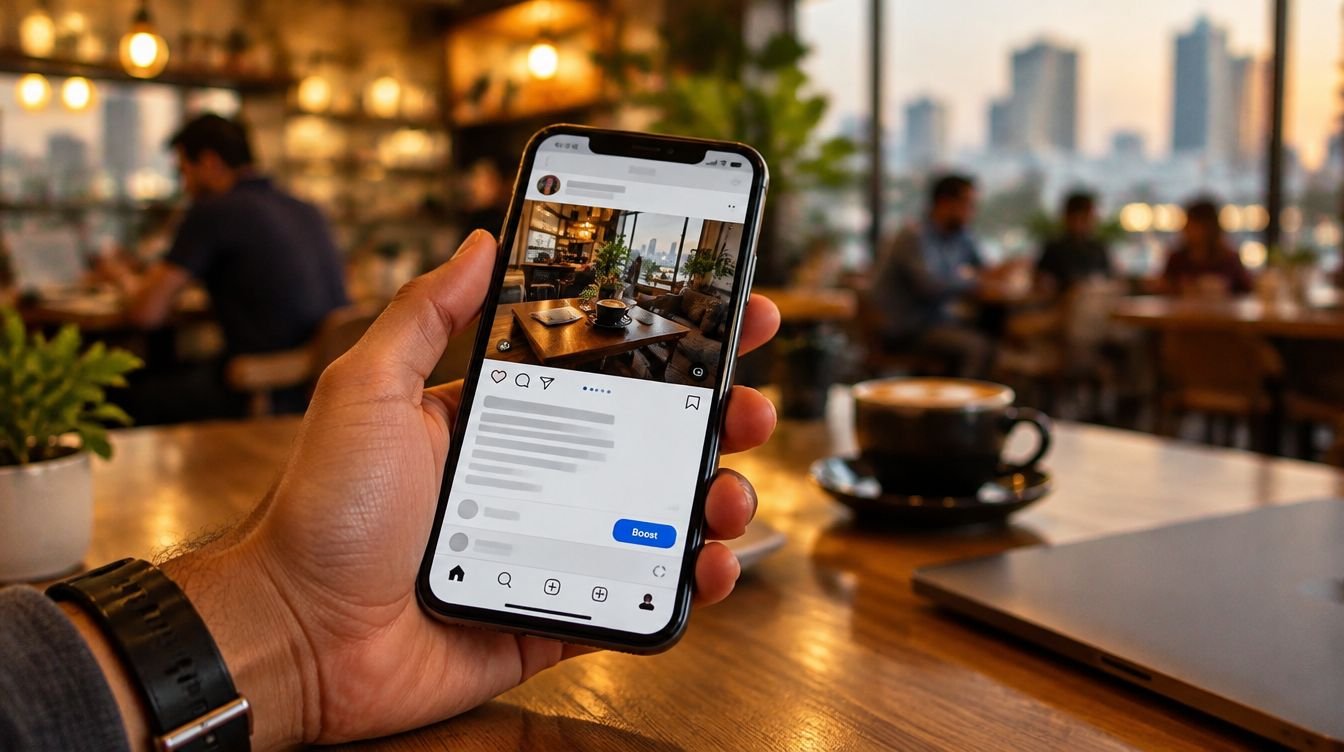
Almost every business that comes to us has tried the same thing first: they post something on Instagram, tap Boost, spend a few thousand rupees and get… likes. Maybe some profile visits. Rarely enquiries, and almost never sales they can trace back to the spend.
The problem is not that paid social doesn’t work. It’s that boosting is a shortcut that skips nearly everything that makes paid social work.
What boosting actually does
A boost tells Meta one thing: show this post to more people. By default the platform optimises for cheap engagement — likes, comments, profile taps — because that is the easiest outcome to deliver. You get what you paid for: attention. But attention without conversion is noise, not growth.
The four things a boost skips
1. The right campaign objective
Ads Manager lets you choose what you want: awareness, traffic, engagement, leads or sales. The algorithm then hunts for people most likely to take that action. If you want enquiries, you need a leads or sales objective — not engagement.
2. The right audience
A boutique resort in Coorg and a budget café should not target the same people. Proper campaigns use location radii, interests, custom audiences (your website visitors, your past customers) and lookalikes built from your best buyers.
3. A creative built to sell
Your organic post was made for followers who already know you. An ad has to stop a stranger in the first two seconds, explain the offer and give a reason to act now. That usually means a different hook, format and call-to-action.
4. Tracking
Without the Meta Pixel and Conversions API set up, the platform can’t see who enquired or bought — so it can’t learn who to find more of. You can’t see it either, which means you can’t tell good spend from bad.
What to do instead
- Decide the one action you want — a form fill, a WhatsApp message, a booking.
- Build a simple path for it — an instant form, a focused landing page or a click-to-WhatsApp ad.
- Install tracking before you spend a rupee.
- Launch a small test with two or three creatives and one or two audiences.
- Read the numbers weekly — cost per lead, lead quality, cost per booking — and move budget to what works.
The takeaway
Boosting isn’t evil; it’s just incomplete. Real performance marketing is a system: objective, audience, creative, landing experience and tracking working together. Fix the system and the same budget starts producing customers, not just likes.
This is the first idea in Chapter 6 of our ebook, The Performance Marketing Blueprint, which covers the eight most common mistakes businesses make online.